
Reviewed November 6, 2026 · For B2B procurement and development teams
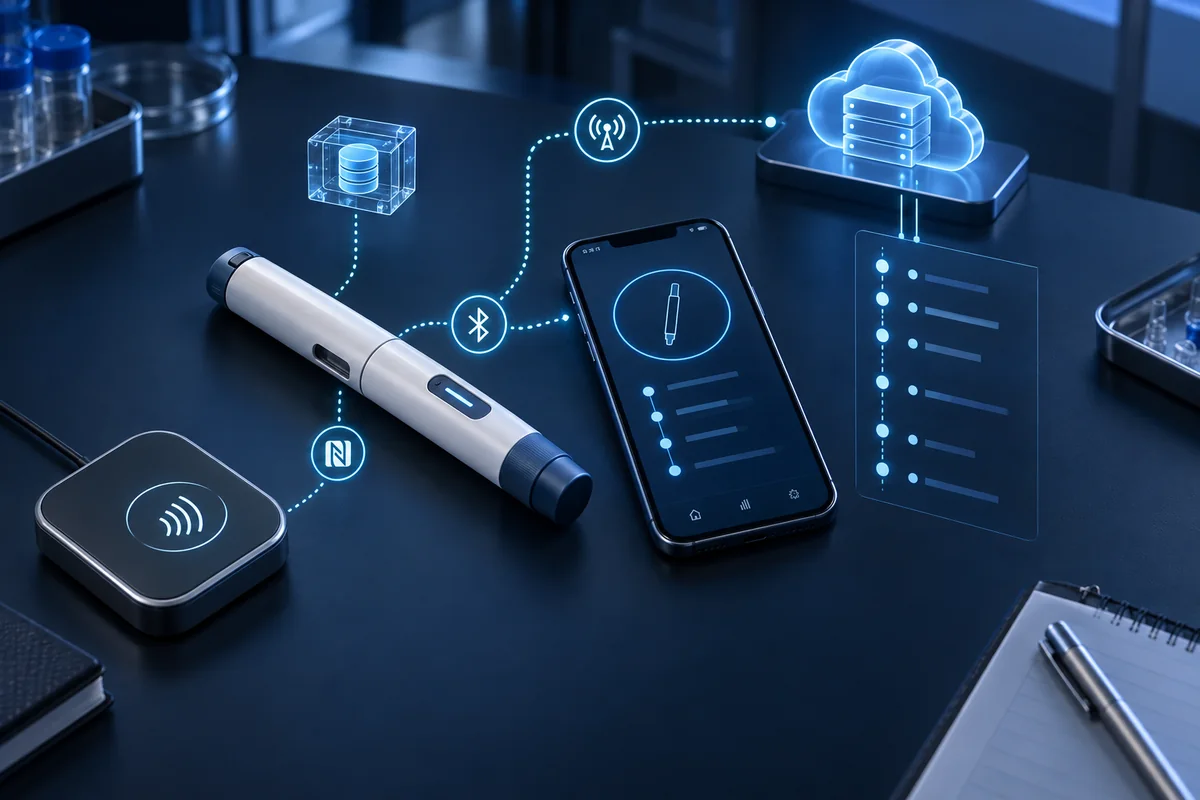
Bluetooth and NFC solve different transfer problems, while a dose log is only as meaningful as the event captured. Buyers must define what the pen senses, when data move, how records are reconciled and what happens when connectivity fails.
Key parameters to define
- Dose-event definition and status
- NFC tap or Bluetooth pairing workflow
- Supported devices and OS versions
- Offline storage and retry behavior
- Time source, pen ID and duplicate handling
- Cloud, export and interoperability interfaces
- Compatibility-list and support ownership
Choose connectivity from the workflow
NFC can support intentional, close-range transfer when the user taps or holds the pen near a compatible device. Bluetooth can support paired, repeated or near-real-time transfer, but introduces pairing, radio, power, background-operation and operating-system dependencies. Neither method guarantees that data reach the intended application. The program must identify supported phones or readers, minimum operating-system versions, app distribution, account requirements, offline behavior, retry logic and regional availability. Compatibility lists should be versioned and maintained because mobile hardware and software change. A procurement brief should describe the user workflow first—clinic download, occasional tap, continuous synchronization or caregiver monitoring—then select the communication route that can meet it with acceptable battery life, usability and support burden. Document the decision, evidence status, responsible owner and unresolved assumptions so later project changes can be reviewed against a stable baseline.
Define exactly what a dose event means
A record may represent a dialed amount, confirmed setting, button press, mechanism movement, estimated delivery or user-entered dose. Those events are not equivalent. If a prime, air shot, cancelled setting, incomplete stroke or manual entry can appear in the log, the data model and app must identify it or explain the limitation. Each record should have a defined timestamp source, pen identifier, dose field, status, units, synchronization state and edit history where applicable. The engineering team should document how duplicates, missing events, clock changes, multiple pens and app reinstalls are handled. Automatic logging can reduce manual entry, but the system should not imply stronger evidence than its sensors and algorithm can support. Write acceptance criteria before testing so observations remain traceable to an approved requirement rather than being interpreted only after the result.
Specify the complete data path
Map the flow from physical mechanism or sensor through firmware, local storage, radio or NFC, mobile application, cloud service, export and clinician or sponsor view. For each handoff, define format, encryption, authentication, latency, ownership, retention, deletion, auditability and failure recovery. Decide which component is authoritative when records disagree and how a user is told that synchronization is incomplete. The program should include test cases for no internet, expired credentials, revoked permissions, phone replacement, low battery, interrupted transfer and unsupported operating-system updates. This architecture also sets the scope for cybersecurity, privacy, software verification and post-launch support. A pen-plus-app concept is a maintained system, not a one-time electronics feature. Record the output, approval owner and change triggers in the project file so procurement, engineering, quality and regulatory teams use the same baseline.
Related technical paths
Smart and Connected Injection Pens · CGM Integration vs Closed Loop · Request a Digital-System Review
Sources and verification
Use the primary sources below to verify the current requirement and its scope. Requirements can change by device, role, market and version; this guide was reviewed on September 21, 2026.
- Novo Nordisk — NovoPen 6 NFC transfer and compatible apps
- Medtronic — InPen system user guide
- FDA — Interoperable medical devices guidance collection
Questions buyers also ask
No. NFC favors intentional close-range transfer; Bluetooth may support ongoing synchronization but adds power and pairing complexity.
Only if the sensing method and validation support that conclusion; many logs represent a mechanism event rather than confirmed tissue delivery.
No. Hardware, operating-system and regional app availability must be tested and maintained.
The required local storage, retry, conflict and user-notification behavior must be defined and verified.
That depends on the use case, but edits should be distinguishable from automatically captured events when data integrity matters.