
Reviewed September 21, 2026 · For B2B procurement and development teams
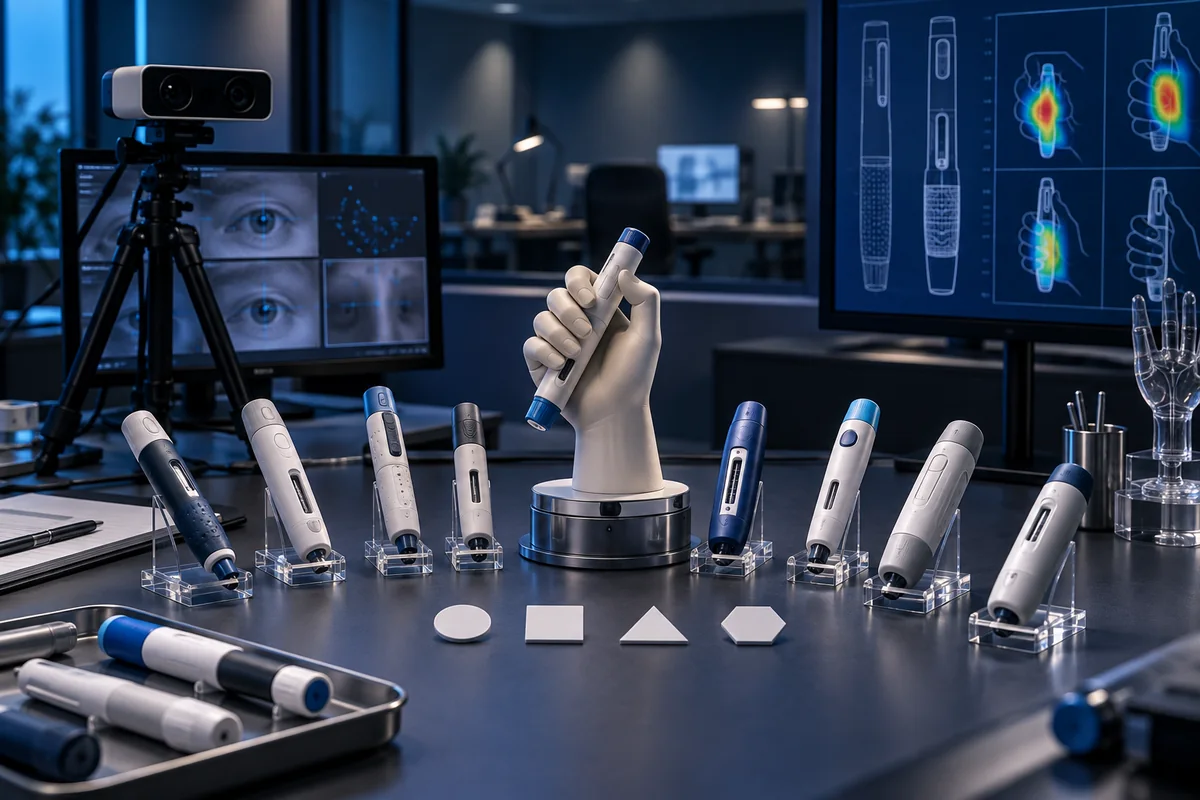
Human factors engineering connects intended users, use environments and the complete user interface to use-related risk. For an injection pen, the interface includes the device, packaging, labeling, training and any connected software.
Key parameters to define
- Intended user groups and capabilities
- Use environments and operating conditions
- Complete task sequence and critical tasks
- Use-related risk analysis
- Device, packaging, labeling and software interface
- Formative-study questions and participants
- Final validation configuration and ownership
Define users, environments and the full interface
An injection pen may be used by a patient, caregiver, clinician, trial participant or trainer, and those groups can differ in age, dexterity, vision, experience, language and cognitive needs. Use may occur at home, while traveling, in a clinic or under time pressure. The user interface includes more than the outer housing: packaging, preparation steps, cartridge or needle attachment, dose display, controls, tactile and audible feedback, injection sequence, error recovery, cleaning, storage, disposal, instructions and connected applications can all affect safe and effective use. A requirements brief should describe these users and environments before industrial design is frozen. Otherwise, appearance decisions can create avoidable use errors or force late mechanism and labeling changes. Document the decision, evidence status, responsible owner and unresolved assumptions so later project changes can be reviewed against a stable baseline.
Connect risk analysis to critical tasks
Map the use sequence and identify tasks where an error or delay could cause harm. Examples may include selecting the correct pen, loading a container, attaching a needle, priming where applicable, setting or confirming a dose, recognizing incomplete delivery, avoiding unintended reuse, interpreting app status and disposing of sharps. The relevant tasks depend on the device and intended use; they should not be copied from an unrelated pen. Use-related risk analysis links foreseeable errors to causes, consequences and controls. Controls can involve inherent design, guards, feedback, labeling or training, but reliance on instructions should not replace a feasible design improvement. The analysis should be revised as prototypes and user evidence reveal new failure patterns. Write acceptance criteria before testing so observations remain traceable to an approved requirement rather than being interpreted only after the result.
Use formative work before final validation
Early formative evaluations help the team understand workflows and compare interface options while changes are still practical. Participants and conditions should represent the intended user groups and environments closely enough for the study question. Findings feed into design inputs, risk controls, labeling and training. Later validation or summative work assesses whether the final user interface supports safe and effective use for the defined users, uses and environments. The plan must control the tested device, packaging, instructions, software and training because those elements form the interface being evaluated. For OEM projects, the parties should agree who owns user research, protocols, recruitment, reports and resulting design changes. A cosmetic sample alone cannot support a human-factors conclusion. Record the output, approval owner and change triggers in the project file so procurement, engineering, quality and regulatory teams use the same baseline.
Related technical paths
OEM/ODM Services · How to Choose an Injection Pen · Request a Project Review
Sources and verification
Use the primary sources below to verify the current requirement and its scope. Requirements can change by device, role, market and version; this guide was reviewed on September 21, 2026.
- FDA — Applying Human Factors and Usability Engineering to Medical Devices
- FDA — Human Factors Considerations
Questions buyers also ask
No. Human factors connects users, tasks, environments, interface design and use-related risk.
Yes. FDA describes the interface broadly, including packaging, labeling and training materials.
Early enough that findings can change the design before final tooling and validation.
Only if the participant strategy and evidence support all claimed users and environments.
No. Prototype fidelity must match the tasks and conclusions being evaluated.