
Reviewed October 24, 2026 · For B2B procurement and development teams
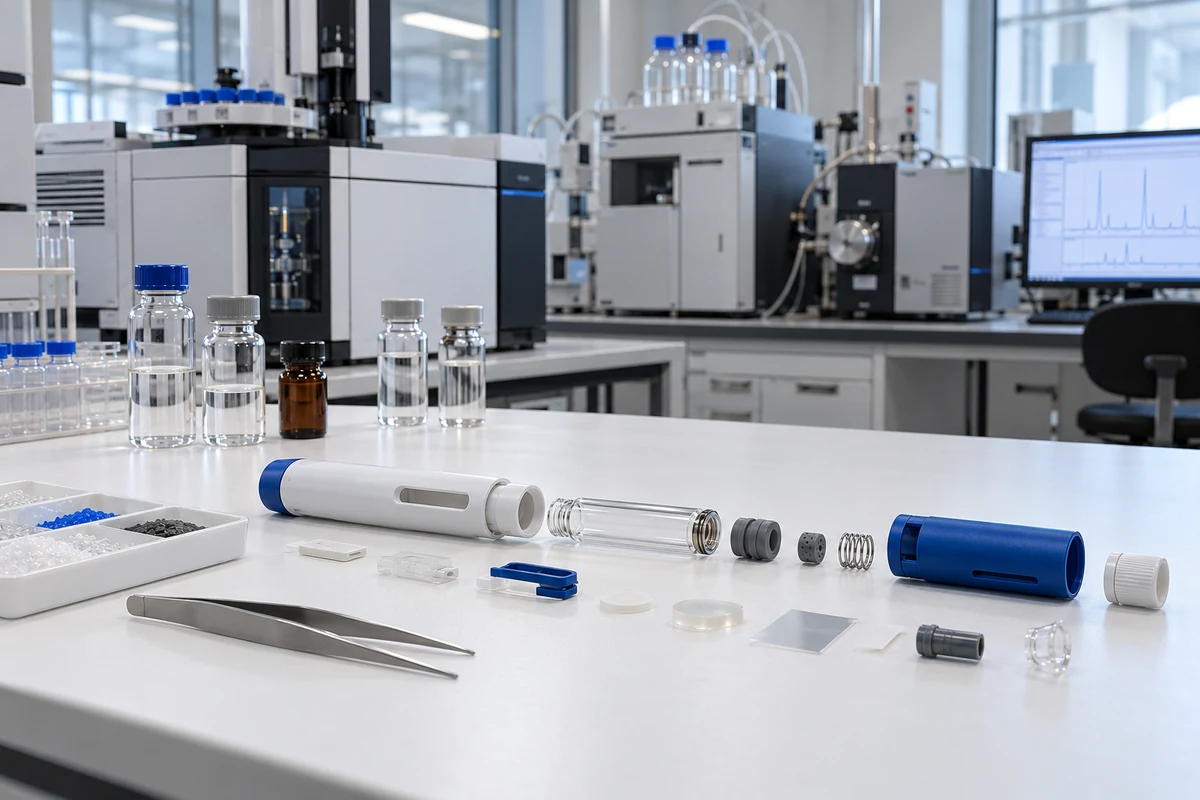
An injection pen extractables and leachables assessment starts with the finished drug delivery configuration, not a generic declaration about plastic or metal. The team maps every direct and indirect contact surface, identifies material composition and manufacturing residues, reviews storage and delivery conditions, and connects each uncertainty to an analytical or supplier-control action. Extractables studies help identify compounds that can be released under controlled laboratory conditions. Leachables work examines compounds that migrate into the drug product during its actual shelf life and use. The product sponsor or drug manufacturer owns the final toxicological assessment, drug-product testing strategy and regulatory conclusion. A device supplier can support the work with bill-of-material data, material declarations, process information, controlled samples and change notices. USP <1663>, FDA container-closure guidance and ISO 10993-18 provide useful frameworks, but none creates a universal pass threshold for every pen, formulation or market. The study plan must remain specific to the contact path, dose, route, duration, patient population and final configuration.
Scope boundary: This page supports B2B materials and evidence planning. It is not medical advice, a toxicological conclusion, regulatory approval or a compatibility statement for an unnamed drug-device configuration.
Assessment inputs to control
- Released bill of materials and supplier composition data
- Direct, indirect and potential transfer contact routes
- Formulation, dose, route and patient exposure assumptions
- Shelf-life, transport, storage and delivery conditions
- Extraction design, analytical methods and reporting rules
- Leachables plan and toxicological assessment ownership
- Unknown-compound and analytical-limit handling
- Supplier notification and reassessment triggers
Build a contact map before ordering analytical studies
Begin with an exploded device drawing and a material inventory tied to released part numbers. Mark components that directly contact the formulation, components that contact the primary container or delivery path, and nearby parts that could contribute through migration, volatilization, transfer or manufacturing residues. The review can include cartridge materials, stopper and septum elastomers, needle adhesive, lubricant, ink, molded polymers, colorants, metal surfaces, cleaning agents and assembly aids. Record contact duration, temperature, surface area, sterilization or molding history, storage orientation and whether contact occurs during shelf life or only during delivery. Supplier declarations are useful inputs, although they do not replace analytical evidence when the risk warrants testing. ISO 10993-18 offers a chemical-characterization framework for medical-device materials with direct or indirect body contact. Its applicability should be documented for the actual pen architecture. Housing parts with no credible contact route may need a different rationale from fluid-path components.
Connect extractables conditions to realistic leachables risk
The extractables plan should be designed around the questions raised by the contact map. Solvents, temperature, duration and surface-area ratio need a scientific rationale that can reveal plausible compounds without creating an irrelevant chemistry profile. Analytical methods may address volatile, semi-volatile, non-volatile, elemental and other material-specific constituents. Method capability, blank controls, sample preparation, identification confidence and reporting rules should be defined before the study begins. Leachables assessment then considers the final formulation, container, device, shelf life, transport, storage and administration sequence. FDA container-closure guidance describes extraction studies and toxicological evaluation as product-specific work influenced by dosage form, route and dosing. USP supplies a framework for extractables assessment of packaging and delivery systems while leaving the individual study to the drug-product manufacturer. A laboratory report alone is incomplete unless detected compounds, unknowns and analytical limits are connected to exposure and toxicological review.
Control supplier information and changes through the product lifecycle
Material risk can change after verification if a resin grade, elastomer formulation, pigment, adhesive, lubricant, mold-release agent, cleaning process, sterilization cycle, manufacturing site or sub-tier supplier changes. Quality agreements should define which changes require advance notice, what composition information can be shared under confidentiality, and how the sponsor receives updated declarations or samples. Incoming controls should confirm the specified material or component identity without implying that routine inspection can detect every chemical change. The risk file should connect supplier information, analytical evidence, toxicological conclusions, stability work, deviations and change assessments to the same configuration baseline. ICH Q3E is relevant because its current Step 2 draft covers extractables and leachables from manufacturing, packaging, storage and delivery, including drug delivery device components. As of October 2026 it remains at Step 3, so teams should label it as draft guidance and verify its status before relying on it. Final acceptance belongs to the responsible product sponsor and market pathway.
Related injection pen guides
- Primary Container and Fluid Path Verification
- Injection Pen Cartridge Compatibility
- OEM/ODM Injection Pen Engineering
- Factory and Quality Approach
Primary sources and status notes
Check the current source and revision status before converting this guide into project requirements. A standard summary does not replace the purchased standard. ICH Q3E is identified here as draft guidance at Step 3.
- USP <1663> Assessment of Extractables Associated with Pharmaceutical Packaging/Delivery Systems
- FDA Guidance for Industry: Container Closure Systems for Packaging Human Drugs and Biologics
- ISO 10993-18:2020, Chemical characterization of medical device materials
- ICH Q3E Extractables and Leachables, Step 2 draft dated August 1, 2025
- ICH Quality Guidelines and current Q3E status
Questions buyers also ask
No. Extractables are compounds released under defined laboratory conditions. Leachables are compounds that migrate into the drug product under its actual storage and use conditions.
A declaration supports risk assessment, but it may not answer questions about process residues, interactions, unknown compounds or migration in the final configuration.
The product sponsor or drug manufacturer should own the product-specific exposure assessment, toxicological conclusion and regulatory submission strategy.
Reassess after relevant changes to materials, formulation, contact path, process, sterilization, supplier, site, shelf life, dose, route or target market.